Views: 3 Author: Site Editor Publish Time: 2026-10-06 Origin: Site
The key to buying a car from a Japanese auction is not simply knowing how to bid. Before the auction starts, you need to decide whether the car fits your requirements, whether its condition is acceptable, and how much you are prepared to pay.
After a successful bid, the process continues with payment, vehicle transfer, export procedures and international shipping. A successful purchase therefore has two parts: making the right decision before bidding and moving the car into the export process after the sale.
Before searching auction listings, define the range of car you are prepared to buy rather than changing your requirements for each listing.
At a minimum, define the make and model, year, maximum mileage, specification, drive type, condition requirements, budget, destination country and destination port.
For dealers, local market demand, target selling price and purchase quantity should also be considered. Clear requirements make it easier to reject unsuitable listings before spending time on the bidding decision.
For overseas buyers using a Japan-based auction service, these requirements also form the starting point for vehicle screening. Super5 Auto's Japan car auction service uses the buyer's model, year, budget, condition and destination requirements when selecting auction vehicles.
When a car appears on an auction listing, do not start with the current price. First check whether the car itself meets your requirements.
If the basic specification does not match your requirements, a low auction price does not make the car a suitable purchase.
Use the available auction information to review:
The auction grade is useful for screening, but it should not be the only reason to bid. Two cars with the same grade can still have different repair histories, damage patterns and specific condition issues.
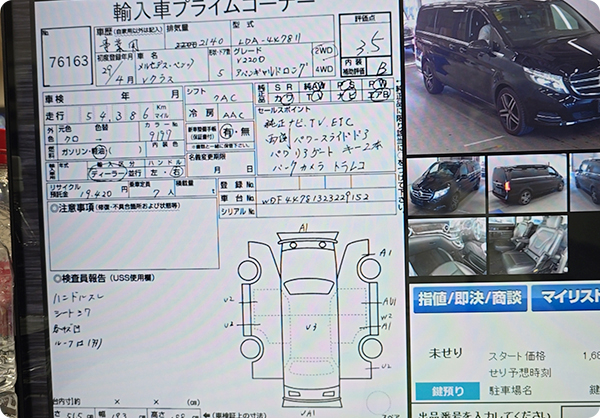
The value of an auction sheet is not simply the grade shown on the page. It helps you understand what condition the inspector found, where the issues are and whether they matter for your intended use or resale market.
Pay particular attention to the damage diagram, repair notes and written comments. Some details that matter to a buyer may not be clear from the overall grade alone.
Auction prices can move quickly. If you decide your limit only after bidding has started, it becomes easier to push the purchase price beyond the budget you originally set.
The actual amounts vary by car, shipping route and destination, so there is no single fixed cost that applies to every purchase.
Once the maximum bid has been reached, stop. The purpose of auction buying is to secure a suitable car within the planned budget, not to win every auction.
One of the main differences between auction buying and purchasing a fixed-price car is that you can walk away from a listing that does not meet your requirements.
Not bidding can be the correct purchasing decision. If a car is not bought, the same model, year, condition and budget requirements can be used to screen the next suitable listing.
A successful bid is only the middle of the process. The car still needs to move through payment, domestic transport, export documentation, customs procedures and international shipping.
Japan Customs requires the relevant export documentation for used vehicles, including registration deletion or planned export documentation depending on the vehicle's registration status. Export declarations also require the relevant declaration, invoice and supporting documents.
See the official Japan Customs guidance on exporting used vehicles .
For buyers using a Japan-based service, it is therefore important to understand who handles the steps after the auction. Super5 Auto's purchase and export process connects auction bidding with Japan-side transport, export preparation and shipping.
A failed bid does not mean the purchase process has to start again. Keep the original:
Then continue screening the next suitable auction listings. For dealers buying regularly, maintaining consistent purchasing criteria is more useful than increasing the budget simply to secure one particular car.
Prepare these details before you start:
Dealers can also add the expected purchase quantity and target local selling price. These details provide a practical starting point for vehicle screening and bidding.
Yes, but the way you participate depends on the auction's membership rules and the eligibility of the service handling the bidding. Before bidding, confirm the bidding method, vehicle information, fees and post-auction export arrangements.
No. The grade is useful for initial screening, but the damage diagram, repair history, mileage, inspector comments and photographs should also be reviewed.
No. Auction-related costs, Japan-side transport, export costs, international shipping and destination-country costs may all add to the total.
Start with your total purchase budget and deduct the expected Japan-side, export, shipping and destination-related costs. The remaining amount provides the basis for the maximum vehicle purchase price.
Continue searching with the same model, year, condition and budget criteria. There is no need to exceed your planned budget simply to secure one particular car.
The car still needs to go through payment, transfer, Japan-side transport, export documentation, customs procedures and international shipping.
Super5 Auto provides used car sourcing through Japanese auctions, with support for vehicle selection, auction bidding and the export arrangements that follow.
Submit Your Vehicle Requirements